Fundamentals · 14 min read
Algae is a surplus, not a species war
Green water, hair, BBA, and diatoms — fix light, food, and nitrate
Identify green water, hair algae, BBA, cyanobacteria, and diatoms, then cut the surplus that feeds them.
Photo: Unsplash
Some algae on the glass is a tank. Soup, hair mats, and slime sheets are leftover light and leftover food. Algaecides kill the look for a week. They do not fix the surplus, so it comes back.
Before you treat:
- How many hours is the light on, and how bright? Schedule. Lighting.
- Are you injecting CO₂ that crashes in the afternoon?
- Are plants growing, or stalled?
- Is mulm sitting in a dead corner?
Wipe what you can see. Then change the clock, the feeding, and the flow.
Green water
Pea soup: single-celled algae in the water column, not a film on the glass. Too much light plus dissolved nutrients, often after you stirred the substrate.
- A UV sterilizer clears the water as it passes through
- A 3-day blackout (cover the tank) plus large water changes
- Then shorten photoperiod and stop banquet feeding, or it returns
New tanks do this. Wait out the cycle too. Water change.
Hair algae and BBA
Green threads, or black brush on wood, plants, and intakes. In planted tanks it is usually swinging CO₂ or micros with no macros.
- Hold CO₂ around 30 ppm if you inject. CO₂ calculator.
- Dose nitrate and phosphate, not iron-only. Fertilizer.
- Twist it off with a toothbrush.
Amanos and Siamese algae eaters graze once conditions improve. They will not fix a CO₂ schedule that dies at 2 p.m. BBA likes high-flow spots with gunk — clean the intake.
Cyanobacteria (blue-green sheets)
Not algae. Slimy sheets, often a smell, often nitrate at 0 with phosphate and no flow.
- Blackout 3–5 days plus water changes
- Get nitrate visible at 5–10 ppm if the rest of the tank is fertilized
- Vacuum the dead spots
Erythromycin is a last resort, not a weekly tool. Check livestock. Do not make it the plan.
Diatoms (brown dust)
Dusty brown film on glass and sand in the first weeks. Silicates from new substrate and glass. Harmless. Wipe. It fades.
If it is still there after two months, tap silicates may be high. Otocinclus and nerites graze it in a cycled tank. They starve in a brand-new one.
What a low-algae tank actually does
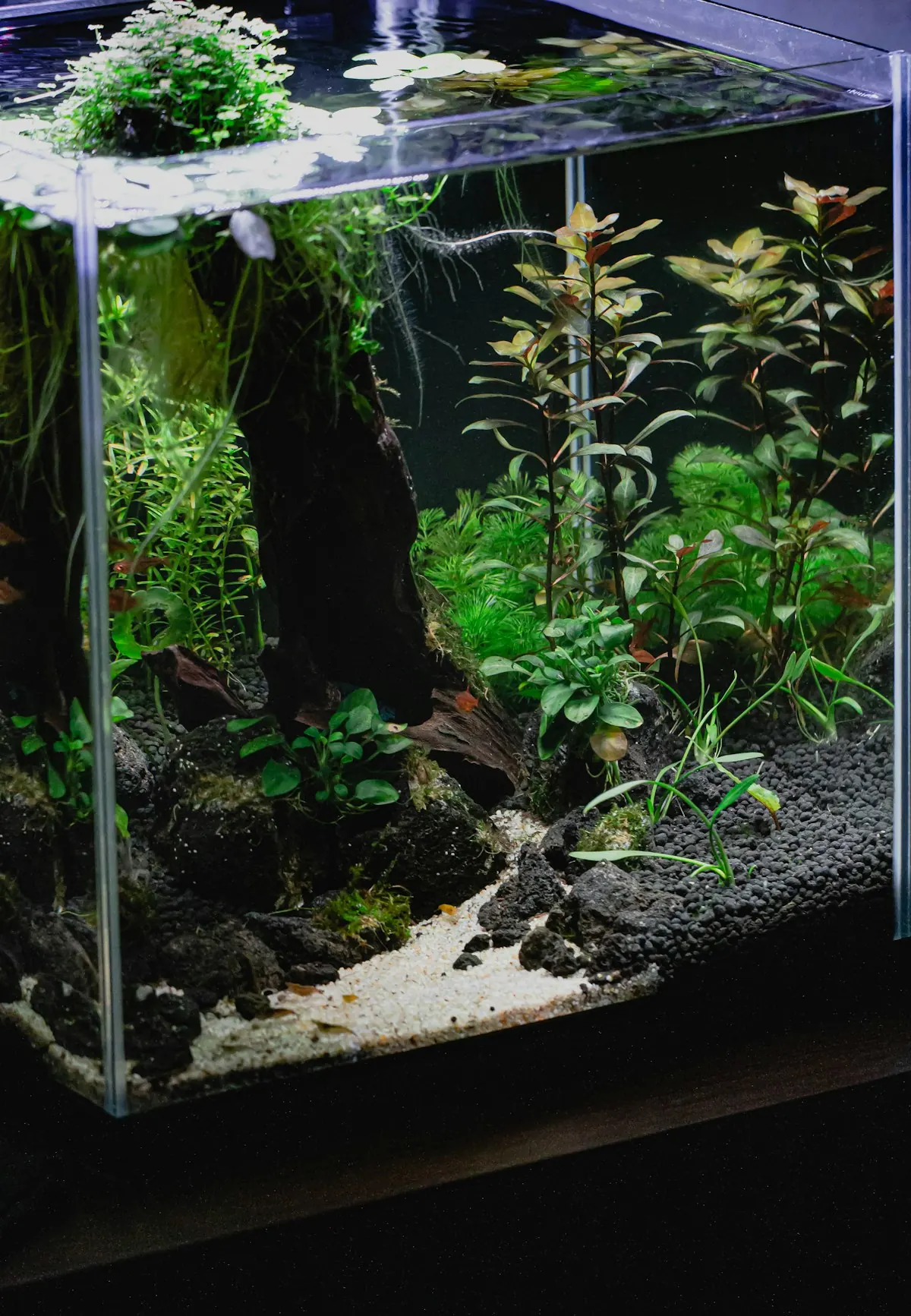
Plants that grow steal the surplus. Six to eight hours of light you sized on purpose. CO₂ that does not crash if you inject. Fertilizer that is not micros-only. Flow. A weekly siphon.
If algae shows up, shorten the clock before you shop chemicals. Add stems that grow in your light — Hygrophila and Vallisneria beat a carpet that melted.
| Symptom | First move | Tools |
|---|---|---|
| Pea-soup green water | UV or blackout, then shorter days | Water change, lighting |
| Hair / BBA | Stable CO₂ + macros, twist off | CO₂, fertilizer |
| Cyanobacteria sheets | Blackout, raise nitrate, fix dead spots | Tests, flow |
| Brown dust (new tank) | Wipe and wait | Otos and nerites later, not day one |
A cycled tank with plants that grow still gets spots on the glass. That is maintenance. Soup, hair mats, and slime sheets are the surplus talking.
Related
- Freshwater vs saltwater aquariums
Freshwater vs saltwater: cost, equipment, livestock, and why FishBaseHQ stays on the freshwater side of the glass.
- Aquarium water parameters
Ammonia, nitrite, nitrate, pH, GH, and KH in a freshwater tank — what to test, what numbers to want, and when to panic.
- You are feeding too much
How much to feed freshwater fish, how often, and how leftover food shows up as cloudy water, algae, and nitrate spikes.