Fundamentals · 8 min read
You are feeding too much
What disappears in two minutes. Leftovers become ammonia.
How much to feed freshwater fish, how often, and how leftover food shows up as cloudy water, algae, and nitrate spikes.
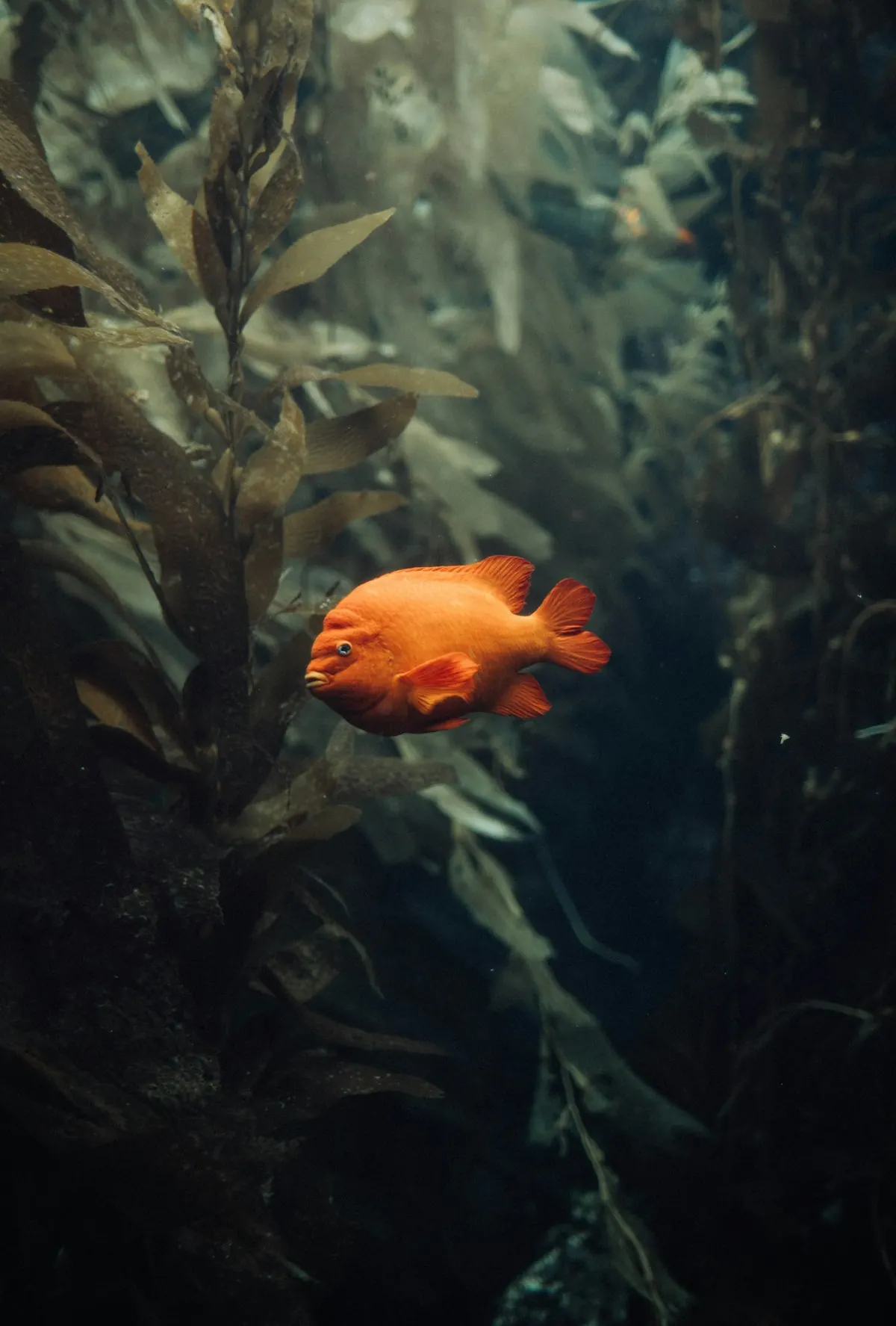
Photo: Unsplash
If you are here, you have been feeding too much. The fish will beg. Their stomachs are not the size of their eyes. Leftover flakes become ammonia, then cloudy water, then algae, then a filter you clean every three days.
The longer feeding page (what to buy, fry, vacation) is feeding aquarium fish. This one is the habit.
Two minutes
Feed what they finish in about two minutes, once or twice a day. If pellets sit on the sand, you overshot. Corys and shrimp will pick. They will not process a banquet.
Skip a day each week for adult community fish. They will not starve. Bristlenoses still need a wafer on a schedule — one, not a stack rotting in the corner.
How you know
- Cloudiness a few hours after dinner
- Nitrate racing between weekly changes
- Algae speeding up with the same light hours
- Filter floss brown in two days
That is food, not a mysterious disease.
Special cases
- Bettas: 2–4 pellets once or twice a day. They will eat until they look like a balloon.
- Goldfish: they will eat themselves sick. Small sinking meals. More water changes, not more flakes.
- Fry: frequent pinches, not one adult-sized dump.
- Plecos: wafers plus wood. Algae in a new tank is not a diet.
If you already dumped half the can
- Siphon the leftovers.
- Change 30–50% — dose conditioner on the new water. Calculator.
- Fast them tomorrow.
- Test ammonia.
Then be honest about stocking. A full tank plus heavy feeding is how a cycled filter loses.
Related
- Freshwater vs saltwater aquariums
Freshwater vs saltwater: cost, equipment, livestock, and why FishBaseHQ stays on the freshwater side of the glass.
- Aquarium water parameters
Ammonia, nitrite, nitrate, pH, GH, and KH in a freshwater tank — what to test, what numbers to want, and when to panic.
- How often should you change aquarium water?
How often to change aquarium water, how many gallons to pull, and how to dose conditioner on the new water only.